
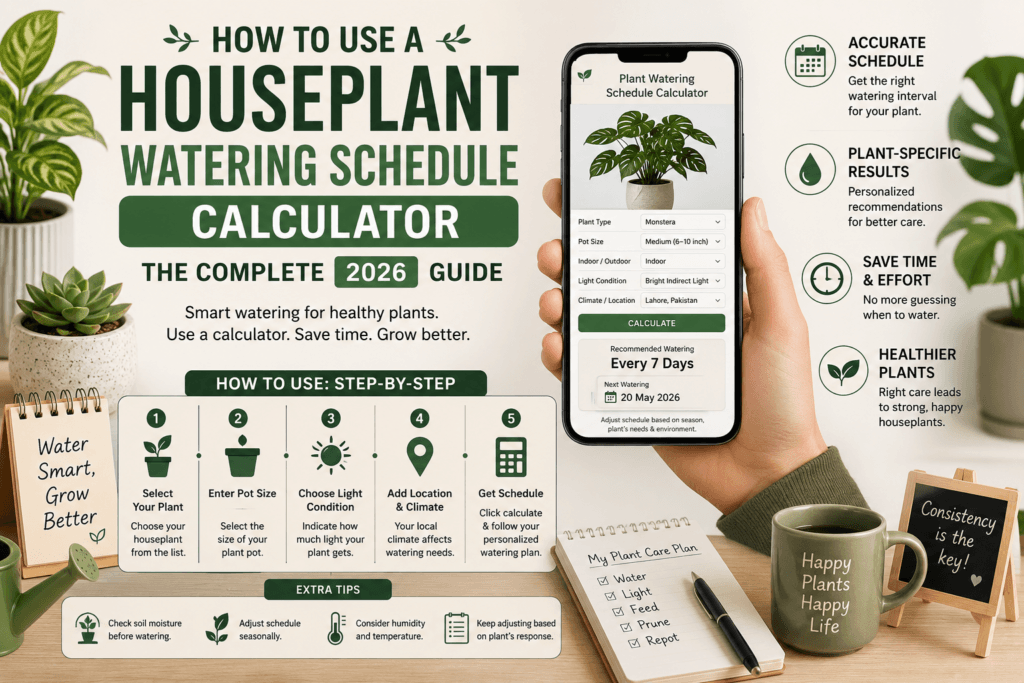
How to Use a Houseplant Watering Schedule Calculator: The Complete 2026 Guide
If you have ever stood in front of a monstera wondering whether today is “the day,” you already know the real problem with houseplant care. It is not that watering is hard. It is that nobody tells you when, and every plant blog gives you a different answer based on someone else’s apartment, someone else’s climate, and someone else’s pot size.
That is exactly the gap a houseplant watering schedule calculator is built to close. Instead of guessing, you plug in details specific to your plant and your home, and you get a watering rhythm that actually matches your conditions. In this guide, I am going to walk you through exactly how to use one, what the numbers mean, why generic “water once a week” advice fails almost everyone, and how to fine-tune the results so your plants stop telling you (through droopy leaves and crispy tips) that something is off.
If you want to follow along with the actual tool while you read, you can open the Houseplant Watering Schedule Calculator in a second tab.
Why “Water Once a Week” Advice Doesn’t Actually Work
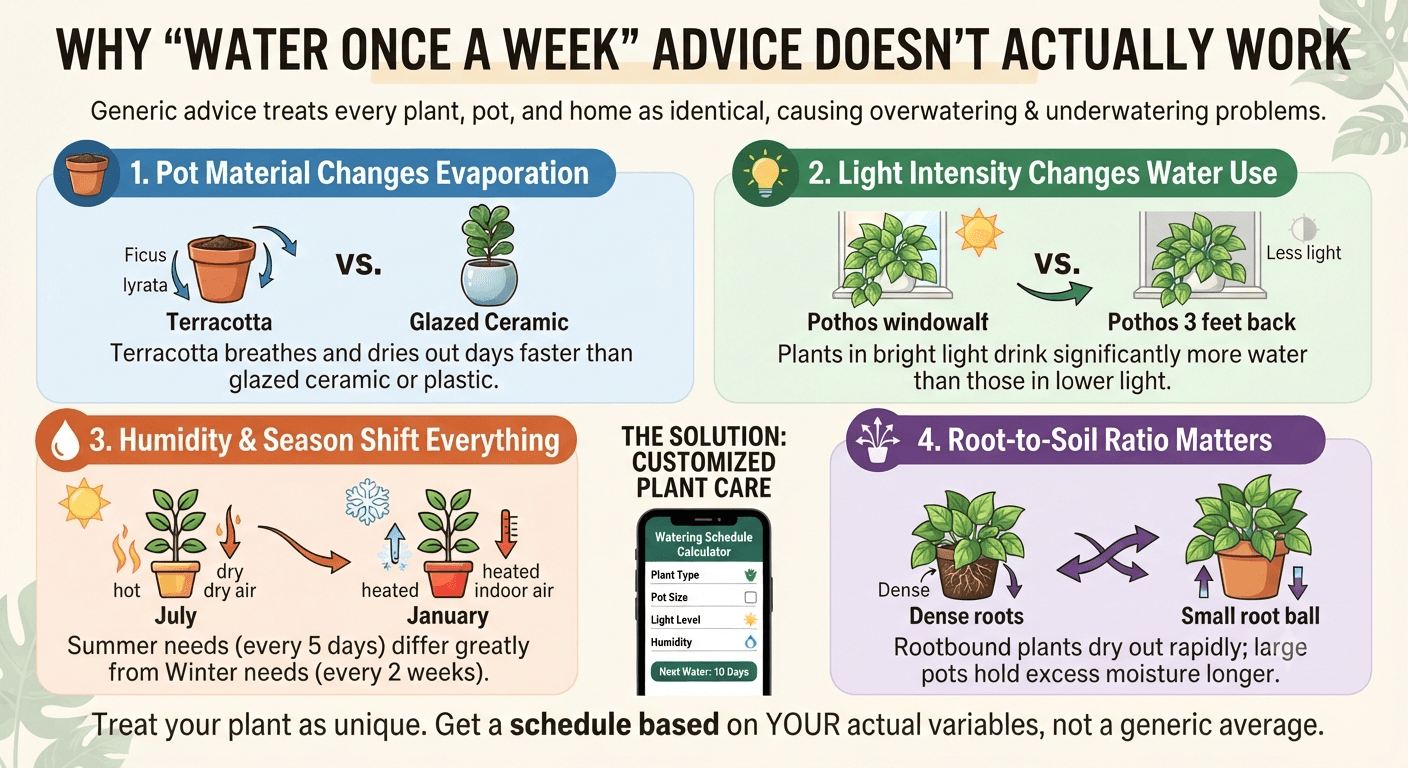
Most watering advice online treats every plant, every pot, and every home as identical. That is the root of almost every overwatering and underwatering problem people run into.
Here is what generic advice ignores:
- Pot material changes evaporation speed. A terracotta pot breathes and dries out days faster than a glazed ceramic or plastic pot of the same size.
- Light intensity changes water use. A pothos on a bright windowsill drinks far more water than the same plant three feet back from that same window.
- Humidity and season shift everything. A plant that needed water every five days in July might not need it for two weeks in January, especially if your heating system is drying out the indoor air.
- Root-to-soil ratio matters. A rootbound plant in a small pot dries out much faster than a young plant sitting in a pot that is too large for its root system.
A watering schedule calculator solves this by treating your plant as a unique case rather than a generic average. Instead of a single number pulled from a blog post written for a completely different climate, you get a schedule built around your actual variables.
What a Houseplant Watering Schedule Calculator Actually Does
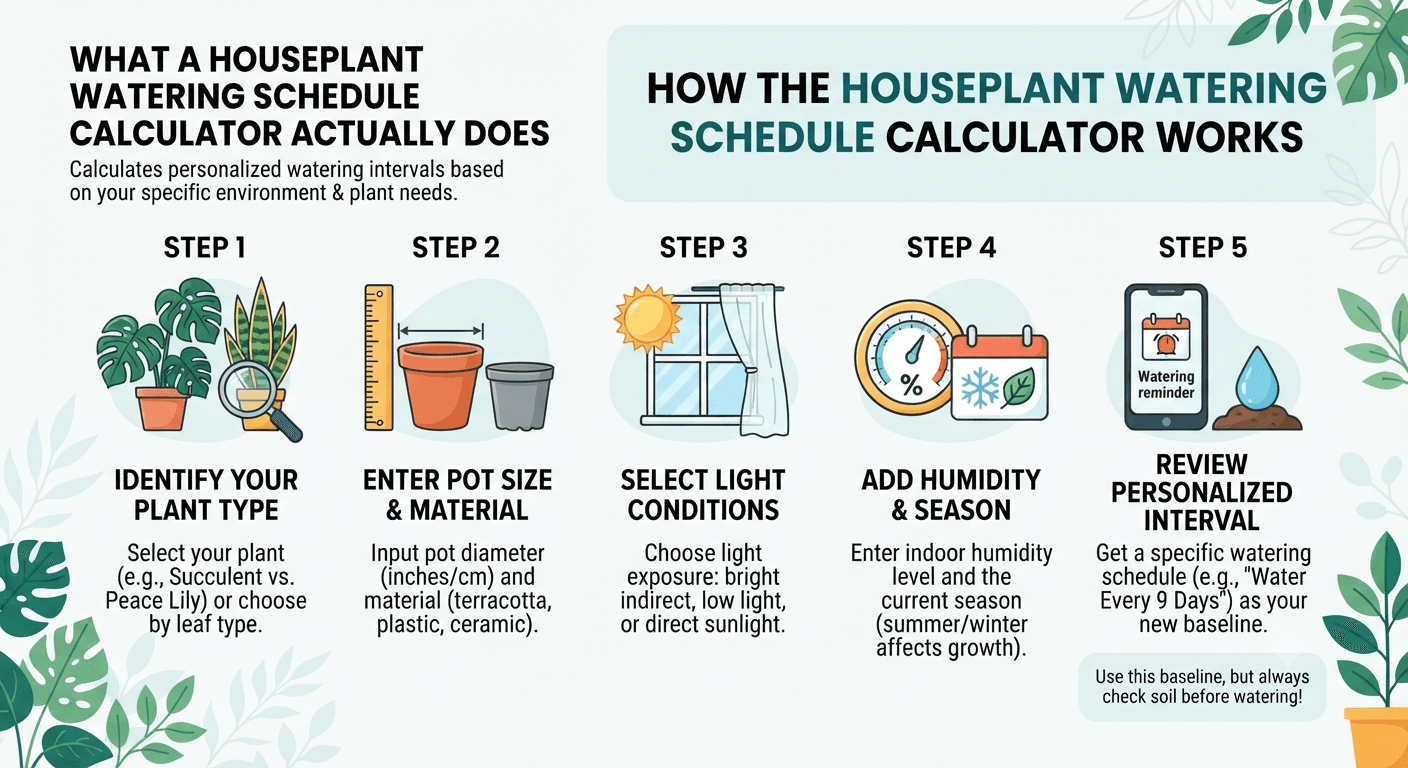
At its core, the calculator takes a handful of inputs — plant type, pot size, light exposure, pot material, indoor humidity, and season — and runs them through a formula that estimates how quickly the soil in your specific setup will dry out. It then converts that into a practical interval, something like “water every 6 to 8 days,” instead of a vague seasonal guess.
Think of it less like a rigid rulebook and more like a starting baseline that adjusts as your environment changes. That baseline is what most plant owners are missing. Once you have it, you can adjust slightly based on how your plant responds, but you are no longer starting from zero every single time.
Step-by-Step: How to Use the Houseplant Watering Schedule Calculator
Here is the exact process, broken down so you can follow it in under two minutes.
Step 1: Identify Your Plant Type
Open the Houseplant Watering Schedule Calculator and select or search for your plant. Different species have wildly different water needs. A succulent or snake plant stores water in its leaves and can go weeks between waterings, while a peace lily or calathea prefers consistently moist soil and will wilt dramatically the moment it dries out too much.
If your exact plant is not listed, choose the closest match by leaf type and native climate. Thick, waxy, or fleshy leaves usually mean lower water needs. Thin, papery, or tropical-looking leaves usually mean higher water needs.
Step 2: Enter Your Pot Size and Material
Next, input the diameter of your pot and the material it is made from. This step trips people up more than any other, because pot size affects soil volume, and soil volume determines how much water is being held (and how long it takes to dry out).
A quick way to check: measure across the top opening of the pot in inches or centimeters. For material, be honest about what you actually have — terracotta, ceramic, plastic, or a decorative pot with a plastic liner inside it (this is extremely common and changes the calculation).
Step 3: Select Your Light Conditions
Choose the option that best matches where the plant actually sits, not where you wish it sat. “Bright indirect light” means near a window with a sheer curtain or a few feet back from direct sun. “Low light” means a corner of a room or a north-facing window. Plants in brighter light photosynthesize more, which pulls more water through the soil.
Step 4: Add Your Indoor Humidity and Season
If you know your indoor humidity percentage, enter it. If you do not, a small hygrometer (usually under fifteen dollars) is a worthwhile investment for any serious plant owner, because it also helps you catch problems with pests like spider mites, which thrive in dry air.
Select the current season as well. Growth slows in fall and winter for most houseplants, which means water needs typically drop too, even if the plant is sitting in the exact same spot.
Step 5: Review Your Personalized Watering Interval
Once you submit your details, the calculator generates a specific interval — for example, “water every 9 days” — along with guidance on how much water to use per session. This is your new baseline. Set a recurring reminder on your phone using that interval, then check the soil before actually watering, rather than watering automatically on the reminder date alone.
Reading the Results: What “Every 7 Days” Actually Means
A common mistake is treating the calculator’s output as an absolute law rather than a starting point. The number you get is a strong estimate based on averages for your inputs, but real homes have small variables no calculator can fully account for — a draft from an air vent, a plant sitting slightly closer to a radiator than you realize, or a recent repotting that changed the soil’s drainage.
Use the interval as your reminder trigger, then do a fifteen-second soil check before you actually pour water:
- Finger test: Insert your finger about two inches into the soil. If it comes out dry, water. If it is still damp, wait two or three more days and check again.
- Weight test: Lift the pot. A pot with dry soil feels noticeably lighter than one that is still holding moisture. Over a few weeks, you will start to recognize the difference intuitively.
- Leaf feedback: Slight, temporary drooping in the late afternoon that perks back up by morning is often normal, not a sign of underwatering. Consistent drooping that does not recover usually is.
Common Mistakes People Make Even With a Schedule
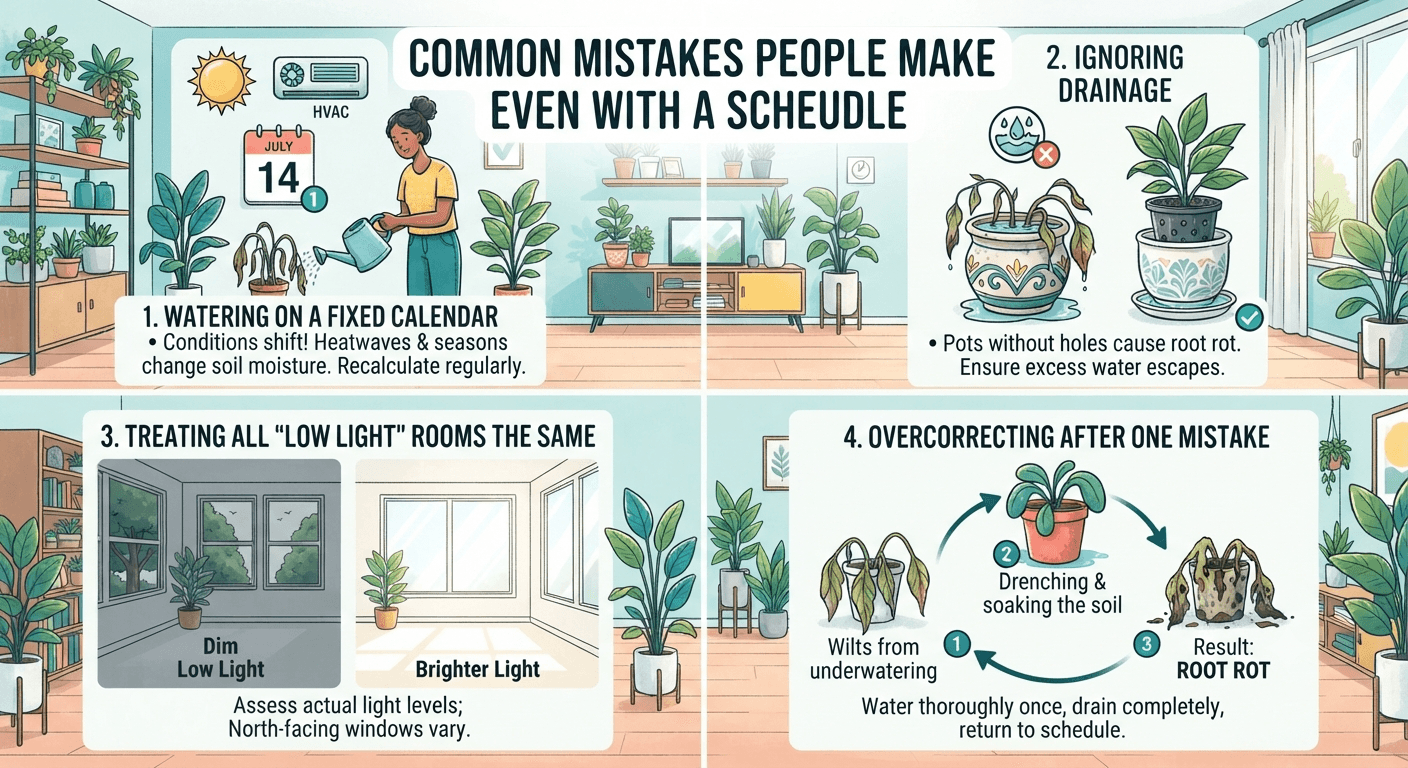
Watering on a Fixed Calendar Regardless of Conditions
Even with a personalized interval, conditions shift. A heatwave, a change in HVAC settings, or moving the plant to a new spot in the room can all shorten or extend how long the soil stays moist. Recalculate every season, and any time you make a significant change to the plant’s environment.
Ignoring Drainage
A watering schedule only works if excess water can actually escape. Pots without drainage holes trap water at the bottom, which rots roots regardless of how carefully you time your watering. If you love a decorative pot without drainage, keep the plant in a plastic nursery pot with holes and simply nest it inside.
Treating All “Low Light” Rooms the Same
A north-facing room in a home with large uncovered windows can still receive meaningfully more light than a north-facing room with small windows and heavy tree cover outside. When in doubt, err toward the next brighter category and adjust based on how the plant responds over a few weeks.
Overcorrecting After One Mistake
If a plant droops from underwatering, the instinct is often to drench it immediately and then keep the soil constantly wet afterward. This frequently causes root rot on top of the original stress. Water thoroughly once, let it drain completely, and return to the calculated interval rather than abandoning it.
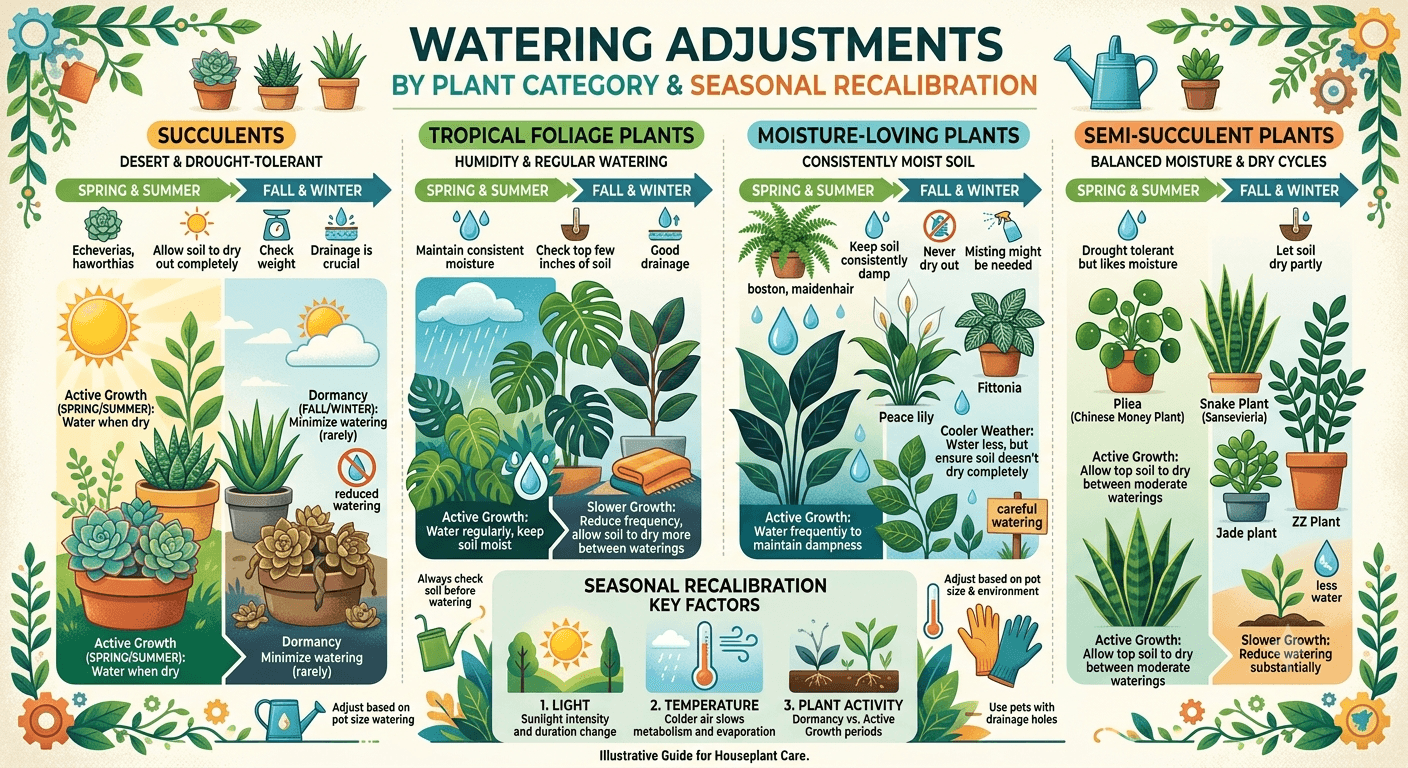
Watering Adjustments by Plant Category
While the calculator personalizes results down to your specific setup, it helps to understand the broad categories your plant likely falls into:
Succulents and cacti (jade plant, aloe, echeveria): These store water in their tissue and prefer to dry out almost completely between waterings. Overwatering is by far the most common cause of death in this group.
Tropical foliage plants (monstera, pothos, philodendron): These prefer the top inch or two of soil to dry out before the next watering but do not want to go bone dry for extended periods.
Moisture-loving plants (peace lily, calathea, ferns): These prefer consistently moist (not soggy) soil and will show visible stress quickly if allowed to dry out completely.
Semi-succulent plants (snake plant, ZZ plant): These tolerate inconsistent watering well and are forgiving if you occasionally miss the calculated date by a few days.
Knowing which category your plant falls into helps you sanity-check the calculator’s output. If a snake plant tells you to water every three days, double-check your pot size and light inputs, because that interval would be unusually frequent for that species.
Seasonal Recalibration: Why Your Schedule Should Change Every Few Months
Most houseplants go through a visible growth cycle tied to daylight hours. Spring and summer bring longer days and active growth, which typically means more frequent watering. Fall and winter bring shorter days and a natural slowdown, which means the same plant, in the same pot, in the same spot, often needs noticeably less water.
A practical habit: run your plants through the calculator again at the start of each season, or any time you notice the soil staying wet far longer than the previous interval suggested. This single habit prevents the most common seasonal killer of houseplants, which is continuing a summer watering routine straight into winter.
Signs Your Schedule Needs Adjusting
Even a well-calculated schedule needs occasional fine-tuning based on real feedback from the plant itself.
Signs you are watering too often: yellowing lower leaves, soil that stays damp well past the calculated interval, a musty smell from the pot, or fungus gnats hovering around the soil surface.
Signs you are watering too rarely: crispy brown leaf edges, soil pulling away from the sides of the pot, slow growth despite adequate light, or leaves that droop and take a long time to recover after watering.
If you notice either pattern consistently over two or three watering cycles, it is worth re-entering your details into the calculator, particularly if anything about the plant’s environment has changed, such as a repotting, a room change, or a new season.
Building a Simple Watering Routine Around Your Results
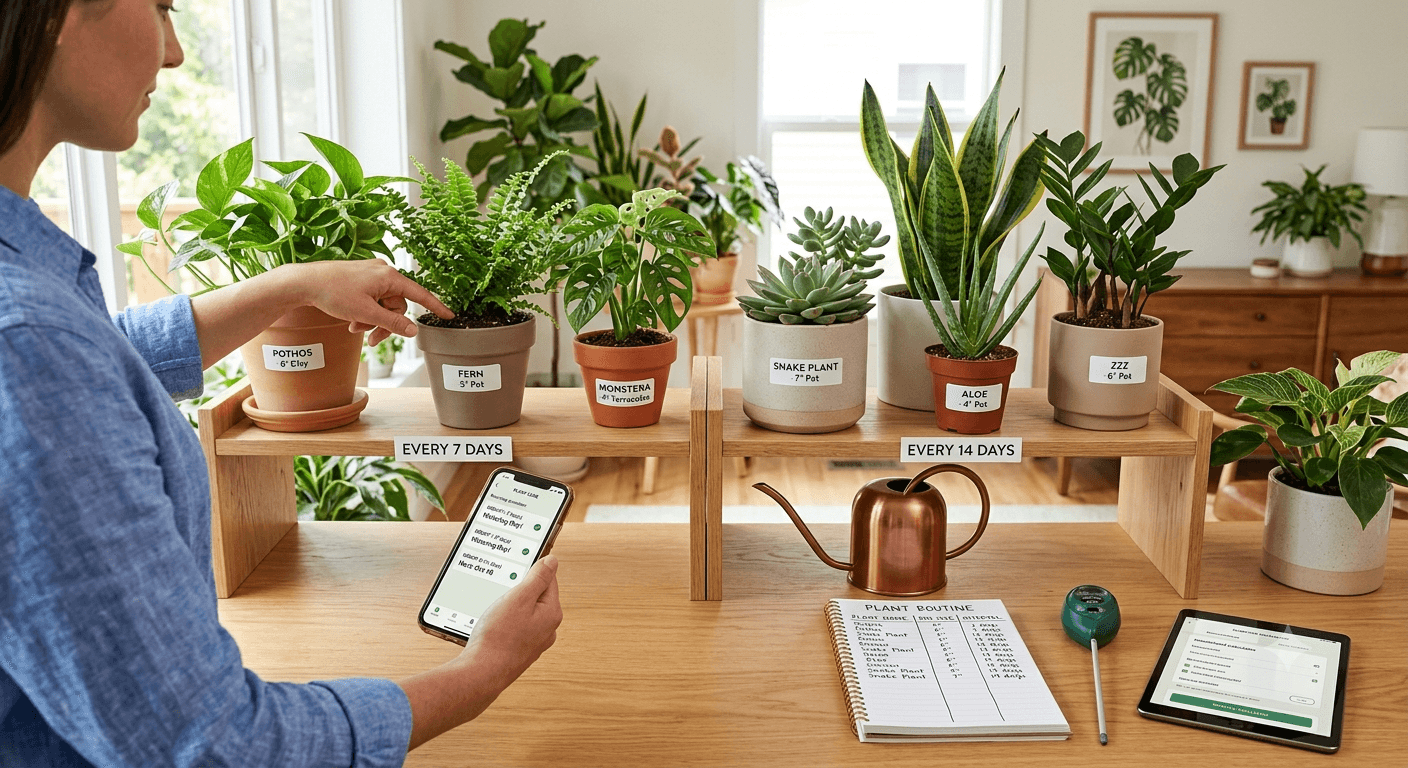
Once you have your personalized interval, the easiest way to actually stick with it is to batch your plants by watering frequency rather than trying to remember each one individually. Group plants with similar intervals together, set one recurring reminder per group, and do a quick soil check across the whole group at once. This turns houseplant care from a daily mental burden into a five-minute weekly or biweekly routine.
If you manage plants for multiple rooms or a larger indoor collection, running each one through the calculator individually and keeping a simple list (plant name, pot size, calculated interval) makes the whole process far more manageable than relying on memory or habit alone.
Frequently Asked Questions
How accurate is a houseplant watering schedule calculator?
It is highly accurate as a baseline estimate because it accounts for the variables that matter most: plant type, pot size, light, material, humidity, and season. It is not a substitute for checking the soil directly, but it dramatically narrows the guesswork compared to generic advice.
Do I need to recalculate the schedule for every single plant I own?
Yes, ideally. Even two of the same plant species can need different schedules if they are in different pot sizes or different light conditions within your home.
What if my plant’s watering needs seem to not match the calculator’s result?
Double-check your inputs first, especially pot size and light category, since small errors there have the biggest impact on the result. If the inputs are accurate and the plant still seems off, treat the plant’s visible signals (leaf condition, soil moisture) as the final authority.
Should I water on the exact day the calculator suggests, every time?
Use it as a reminder to check the soil, not as an automatic trigger to pour water. The finger test or weight test should always be the final confirmation.
Does repotting change my watering schedule?
Yes, significantly. Fresh potting soil holds moisture differently than older, more compacted soil, and a larger pot means more soil volume to dry out. Recalculate a few weeks after any repotting.
Is it better to underwater or overwater slightly?
For most common houseplants, slight underwatering is safer than slight overwatering, because root rot from excess moisture is much harder to reverse than temporary drought stress.
Final Thoughts
Watering is the single most common source of houseplant stress, but it is also the most fixable, once you stop relying on generic weekly advice and start working from numbers that reflect your actual plant, pot, and room. A calculator does not replace your judgment. It gives your judgment a reliable starting point, so the finger test and the weight test become confirmation steps rather than complete guesswork.
If you have not tried it yet, run your plants through the Houseplant Watering Schedule Calculator and build your own simple routine from there. And if you are looking for more free calculators and everyday tools beyond plant care, the full collection is available on the free online tools page.